
Property problems
Why Driveways Turn Black
Most driveways do not turn black overnight. They darken as dust, traffic residue, moisture and organic growth settle into the surface — often unevenly.
Surface type, shade, drainage and age decide how that looks and what cleaning can realistically change. Two quotes for the same driveway can also differ for legitimate reasons: preparation, access, method, rinse quality, neighbouring splash risk and how thoroughly finish work is included.
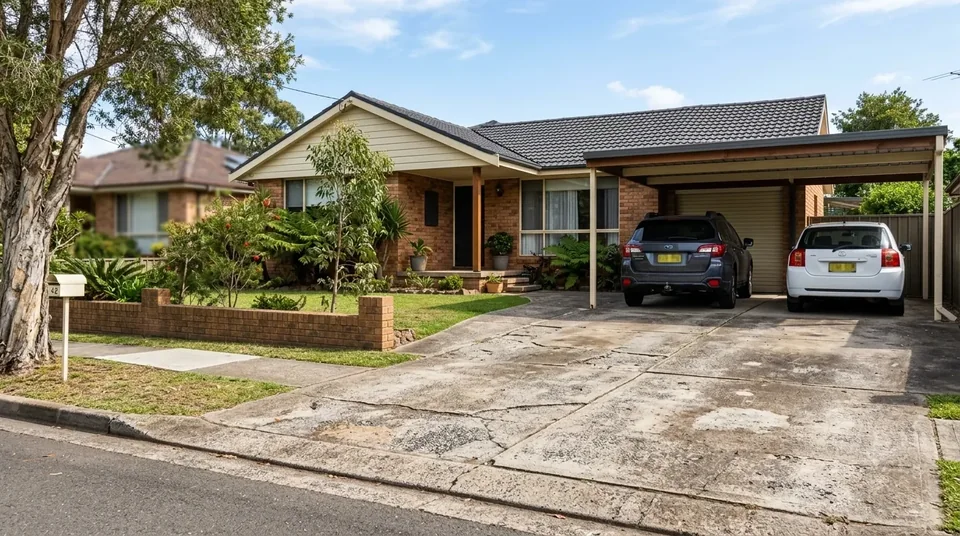
Why driveways develop dark build-up
Dust and soil settle into small openings in porous surfaces. Vehicles add tyre residue and road grime. Leaves and organic matter break down where they sit. In shaded strips, moisture stays longer and organic growth becomes more noticeable.
The result is often a patchy darkening rather than a uniform colour change. Edges beside fences, under trees or against the house wall commonly look different from the open centre of the drive.
How surface type changes the problem
Concrete
Standard concrete is porous. Fine dirt and organic growth can sit below the immediate surface, which is why appearance can return unevenly if only the top film is disturbed.
Exposed aggregate
The textured finish traps material around the stones. Existing sealers and the condition of the aggregate layer should guide method and pressure.
Pavers
Joints collect soil, weeds and organic growth. Loose or sunken sections need care so cleaning does not make movement worse.
Decorative or coated concrete
Coloured, patterned or coated finishes need an approach suited to the coating that is still present. Worn coatings can look blotchy after cleaning if expectations are set too high.
Natural stone
Stone varies widely. A method that suits concrete may be too aggressive for some stone types. Identify the material before choosing a process.
Why neighbouring driveways can look different
Sunlight, shade, drainage and traffic explain most of it. A drive that stays damp beside a fence will often darken faster than an open, well-drained surface used by one car a day.
Previous coatings, repairs and cleaning history also matter. Comparing your driveway with a neighbour’s is useful for curiosity — less useful as a maintenance rule.
Local conditions without stereotypes
Some inland Greater Sydney properties see more noticeable dust after dry spells or nearby earthworks. Tree-lined streets can bring shade and organic matter. Exposed coastal sites can see more moisture and wind-blown material. None of those patterns is universal street by street.
For a broader way of reading site conditions, see Western Sydney Property Care.
Why cleaning method matters
Good driveway work starts with what the surface is and what it can tolerate.
Pressure washing can suit many hard surfaces when dirt, grime or organic growth has built up and the substrate is sound. Pressure alone is not a complete plan. Tip choice, distance, detergent where appropriate, and controlled technique all matter.
Gentler methods may be better where coatings, soft stone, unstable pavers or neighbouring splash risk make aggressive force a poor choice. Soft washing approaches are discussed more broadly on our soft washing service page; suitability still depends on the surface in front of you.
Rinsing and protection are part of quality. Leaving residue on glass, walls, gardens or neighbouring property is not a finished job. A “blast and leave” approach can look busy while skipping the parts that protect the property and the result.
When sealing becomes worth considering
Sealing or other aftercare can help some surfaces stay cleaner longer, but it is a separate decision from cleaning. Product choice, surface readiness and expectations deserve their own explanation — that topic is on the Learning Hub roadmap as future content rather than a half-finished pitch here.
What pressure can and cannot fix
Deep oil marks, rust, dye-like staining and colour change that has penetrated a porous surface may remain. Cleaning also does not repair cracks, movement, failed coatings or structural damage.
Being clear about those limits up front is better than promising a brand-new look from a wash alone.
Responsible runoff
Wash water can carry dirt, detergents, oil residue and other contaminants away from the driveway. Wash water and contaminants should not be directed into stormwater drains. In NSW, the public principle is that the drain is just for rain.
A cleaning plan should account for nearby drains, garden beds and local requirements. See NSW EPA stormwater guidance.
When driveway cleaning is worth considering
There is no fixed interval that suits every driveway. Shade, moisture, traffic, vegetation, drainage, surface type and presentation needs all influence timing.
Plan around the driveway’s actual condition. That avoids unnecessary servicing while still keeping entrances presentable and safer underfoot when organic growth becomes slippery when damp.
Why driveway quotes differ
- surface type and condition
- size and how soiled the area is
- preparation and protection of adjoining areas
- parking and equipment access
- method required (and whether gentler work takes longer)
- rinse, clean-up and wash-water handling
- travel and scheduling for the site
Compare inclusions. A price that skips preparation or responsible runoff planning is not the same product as a price that includes them.
Helpful resources
- Bureau of Meteorology — NSW weather information.
- NSW EPA stormwater guidance — why wash water should stay out of stormwater drains.
- Service NSW local council directory — local council information.
Short FAQ
Rain may move loose dust. It generally does not remove compacted grime, established organic growth or deeper staining.
No. Oil, rust, permanent discolouration, coating wear and existing damage may remain.
No. Surface type, finish and condition should be assessed first. Some surfaces need a gentler method.
When to get professional advice
From the ground, you can note shade, damp patches, moss, oil marks and whether the surface looks worn or previously coated. Sweeping loose leaves and dirt is usually a reasonable homeowner task.
Call a professional when the surface type is unclear, staining is heavy or slippery when wet, a previous sealer is peeling, or you are considering pressure equipment. Operating pressure equipment, handling trade chemicals, or working from a ladder is not covered here.
VVPS can discuss driveway cleaning and sealing, pressure washing or concrete sealing after looking at the surface and condition. Inland lots may also find West / North-West useful for access and size context.
Have a question about a darkening driveway?
Tell us the surface type if you know it, what you have noticed, and anything about shade or staining. Photos after the enquiry can help us discuss practical options.
Ask a question or request a free quote